Ask a room of nail technicians where nails get wrecked and you will get one answer: removal. Not application, not the products themselves, but the ten impatient minutes when a set comes off wrong. Peeling, prying, and biting off lifted product strips the surface layers of the natural nail, and the thin, bendy nail left behind then gets blamed on the gel or acrylic that used to cover it. In Waxhaw as everywhere else, the soak-off versus peel-off difference is the whole ballgame, so here is how to judge removal (yours or a salon's) line by line.
What each method actually does to the nail
Soak-off removal uses remover to soften product until it releases with gentle pressure. The natural nail surface stays intact because nothing is forced. Peel-off removal relies on leverage: once an edge lifts, the product is worked loose by pulling, and it takes the top layers of nail plate with it wherever the bond was still strong. The result is white, rough patches, thin spots that bend, and peeling tips for weeks afterward. One bad removal can take months to grow out, because fingernails replace themselves slowly.
Removal done right: the pass/fail checklist
- Product softens before it moves. Pass: wraps or a soak sit undisturbed for several minutes. Fail: filing and prying start immediately, on hard product.
- Tools push, never pry. Pass: softened product slides off with a gentle push at a shallow angle. Fail: a tip or tool is worked underneath to pop sections loose.
- Residue gets re-soaked, not scraped. Pass: stubborn spots go back under the remover. Fail: dry scraping until the nail looks white and scratched.
- The bare nail looks dull, not damaged. Pass: an even, slightly matte surface. Fail: shiny thin patches mixed with rough white areas, which is stripped nail plate.
- No pain, no heat, no forcing. Pass: boring throughout. Fail: any moment where you brace yourself. Removal should never hurt.
- The nail gets inspected before anything new goes on. Pass: the technician looks at all ten bare nails. Fail: new product starts over an unchecked nail.
The home version, done patiently
You can remove gel polish at home without wrecking anything if you accept the one rule: time does the work. File just the shiny top surface to break the seal, soak cotton in remover, place it on each nail, wrap, and wait a full ten to fifteen minutes without peeking and re-wrapping every two minutes. Softened gel should push away like soft wax. Anything still stuck gets another soak, not more force. Acrylic and dip sets take longer and are where home removal most often goes wrong; if a set resists after repeated soaking, that is your sign to let a salon finish the job.
Why peeling feels faster and costs more
Peeling wins the minute and loses the season. The nail it leaves behind splits at the thin spots, holds polish poorly, and often pushes people straight into another enhancement set to hide the damage, which restarts the cycle. At Finesse Nails, the technicians would rather spend an extra ten minutes soaking than rebuild on a stripped nail, because every future service depends on that surface. Treat any place that rips a set off quickly as telling you something important about how it values your nails.
Recovering from a bad removal
If the damage is already done, keep nails short so thin edges cannot flex and split, use cuticle oil daily, and give the nail a few weeks of light polish or nothing while the worst of it grows toward the tip. Peeling layers at the free edge can be filed smooth gently, never pulled. The thin section has to grow out; no coating puts the stripped layers back, though a protective overlay can keep the nail from snagging while it does.
The ten-minute test
Here is a simple gauge to carry into any removal, anywhere: if the process is finished in under ten minutes for a full enhancement set, something was forced. Genuine soaking cannot be rushed below the time the product needs to soften, and that time is measured in tens of minutes, not in the gap between two clients. Slow is not inefficiency here. Slow is the entire method.
Common questions
Is acetone itself the thing damaging my nails?
Acetone dries the nail and skin temporarily, but the lasting damage people describe almost always comes from prying and scraping. Moisturizer and cuticle oil handle the dryness.
What if one nail lifts and the rest are fine?
Do not peel the lifted one. Clip nothing, keep it dry, and have just that nail soaked off and repaired before moisture gets trapped underneath.
How long should a salon soak-off take?
Plan on roughly fifteen to thirty minutes depending on the product and its thickness. A removal that is over in five minutes was almost certainly forced.
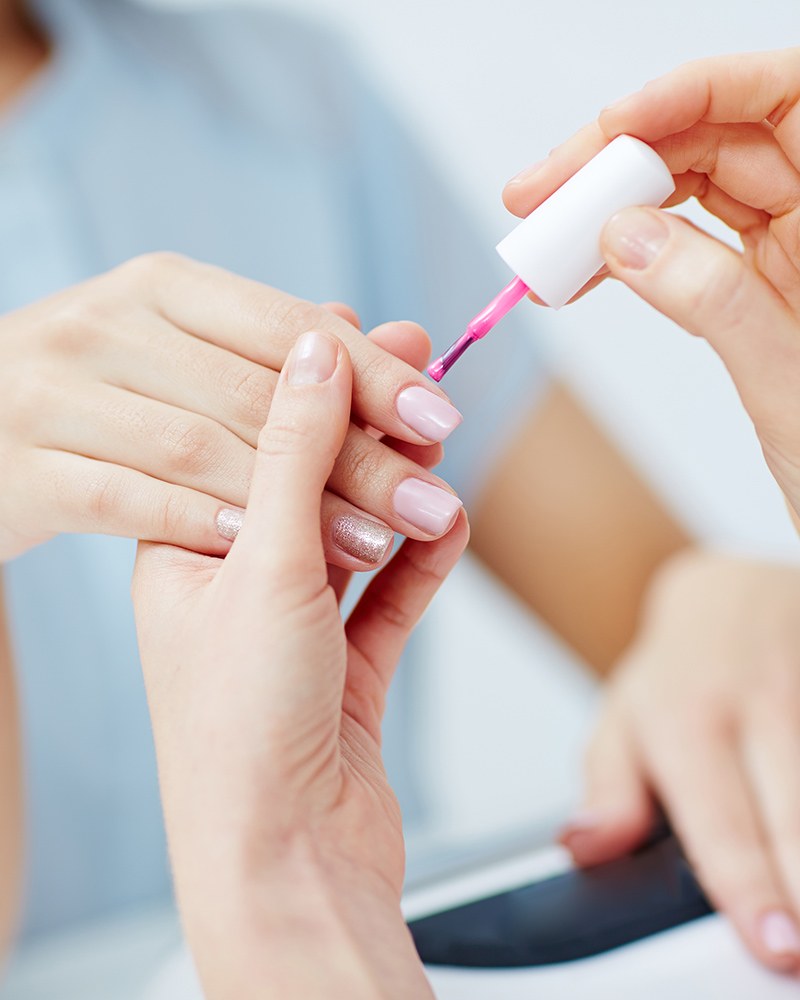
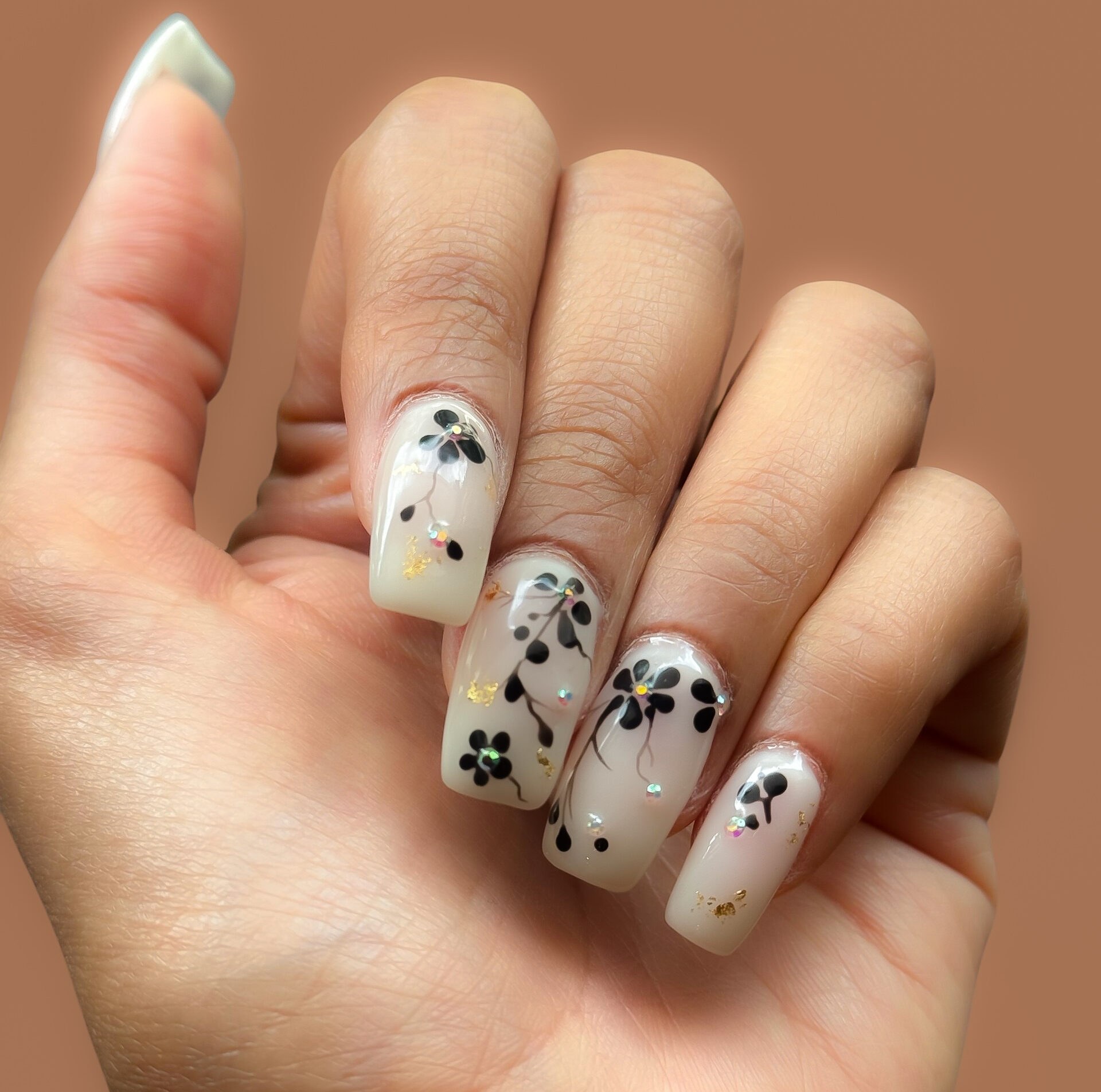
Photos in this guide are representative stock images.
← All guides from Finesse Nails← Back to Finesse Nails