Every enhancement set reaches a fork in the road: fill what has grown out, or soak it all off and start fresh. Fills are the default for a reason, since they are quicker and keep your length. But filling forever is not a plan either. Product ages, small lifts get buried under new layers, and at some point the honest move is a reset. Knowing the timing and the tell-tales helps you make that call in a Waxhaw salon chair instead of discovering it when three nails let go in the same week.
The fill rhythm, and why it exists
Fingernails grow about three millimeters a month, so by two to three weeks a visible gap opens at the cuticle and the thickest part of your set has crept toward the tip. A fill corrects both problems: the grown-out edge is filed down, the surface is rebalanced, and new product fills the gap. Stay inside that rhythm and a set can be maintained for months. Stretch it to five or six weeks regularly and each fill becomes a repair session, with more filing, more lifting to chase, and a weaker foundation under the new product.
How to read your own set between visits
- Check the cuticle gap. A smooth half-moon of natural nail at the base is normal growth. A gap you can catch a fingernail under is lifting, which is a different problem.
- Look at the stress point. See a faint line or feel a flex across the middle of the nail when you press the tip? Hairline cracks start there, and they spread under a fill if they are not filed out and rebuilt.
- Test the sidewalls. Product pulling away at the sides, or a white edge appearing where it was clear, means moisture is getting in. One nail doing this is a repair; several doing it is a pattern.
- Note the color under the product. Healthy nail under a clear or light set looks pink and even. Green, dark, or cloudy patches mean the set should come off and the nail should be seen bare, not covered again.
- Count your repairs honestly. If the last two fills each included multiple broken or lifted nails, the set is telling you its foundation is done. Believe it.
- Decide in the chair, before prep starts. Fresh set or fill is a five-minute conversation at the start. Deciding halfway through wastes the prep either way.
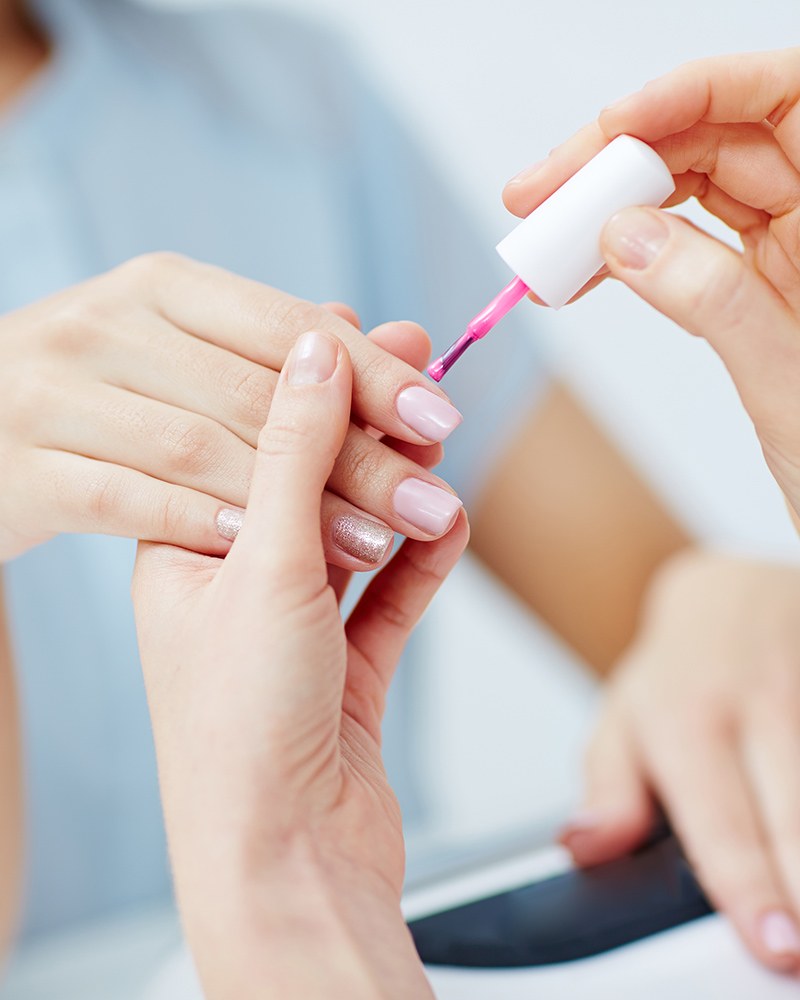
When a fresh set is the smarter buy of your time
Choose the soak-off reset when you want a real shape or length change, when lifting shows on most nails, when you can see discoloration under the product, or when the set has been filled so many times that the oldest product is months old and brittle. A fresh set also makes sense after a hard break that leaves nails at mismatched lengths; matching everything down and rebuilding beats patching a set into a staircase. At Finesse Nails, a reset appointment takes longer than a fill, so book it as one rather than springing it on a fill slot.
What a proper reset looks like
Product is soaked and gently eased off with no prying, the natural nail is cleaned and inspected in the open (this inspection is half the point of resetting), and only then does new product go on. If a nail looks questionable bare, the right answer may be a week or two with no enhancement on that nail at all. A salon that will cover a suspicious nail without comment is saving minutes at your expense.

The pattern that works for most people
Fills every two to three weeks, a fresh set when the tell-tales stack up rather than on a fixed calendar, and no heroics in between. Most long-term wearers land on a reset every few months simply because life (a break, a color trapped under layers, a season of lifting) presents the bill. Listen to the set, keep the rhythm, and neither option ever becomes an emergency.
Common questions
How many fills can I get before I need a fresh set?
There is no fixed number. Healthy, well-kept sets take many fills; the deciding factors are lifting, discoloration, cracks, and product age, not a count.
Is a fill bad for nails if I keep doing it?
No, fills done on time with gentle prep are the standard way sets are maintained. Damage comes from overdue fills, buried lifting, and rough removal.
Can I switch products at a reset?
Yes, a soak-off is the clean moment to change between acrylic, dip, or gel systems, since the natural nail is bare and can be assessed first.
Photos in this guide are representative stock images.
← All guides from Finesse Nails← Back to Finesse Nails